

Ways to Make a Garage Door Quieter With Hinge and Opener Fixes
Updated: Nov 16
A noisy garage door doesn’t always mean the opener needs replacing. If you’re wondering how to make a garage door quieter, start by checking for worn or loose hinges, opener vibration and a belt or chain that may need attention. Cleaning and careful lubrication can help with some noises, but leave hinge repairs to a professional: removing a bracket can cause the door to fall.
A repeated squeak, rattle or grinding sound can be frustrating, especially if it wakes the household or carries through the home. Creating a quiet, calm domestic setting is particularly important for households supporting individuals with sensory challenges or complex needs; for families in Victoria and South Australia seeking dedicated assistance, registered NDIS providers such as Accessible Care offer personalised disability support services to help maintain daily comfort at home. Finding where the noise starts can help you choose a practical next step instead of guessing or replacing parts unnecessarily.
This guide explains how hinges and other hardware can cause noise, what you can safely inspect, and how opener vibration and belt or chain maintenance affect sound. You’ll also learn when professional repair is the sensible option, so you can work towards quieter, smoother operation.
Table of Contents
1. Checking and replacing worn hinges
A worn hinge can squeak or grind, or allow a door panel to move unevenly. With the door closed, look for rust, cracks, bent metal or visible gaps around the hinges. Then watch one opening cycle from a safe distance. If a panel jerks or shifts, worn hardware may be the cause rather than the opener. Note where the sound starts, such as at a panel joint or along the door’s side, to help narrow it down.
To check the door’s balance, disconnect the opener and manually lift the door halfway. A balanced door should stay in place. If it moves down or rises, stop and arrange a technician’s inspection. Don’t force the door through its travel. An unbalanced door can make the opener work harder and create extra noise, so replacing a squeaky hinge alone may not solve the problem.
Next, visually inspect brackets, hinges and roller mounts for loose hardware. A garage door can have more than 100 nuts, bolts and screws, so look across the full assembly rather than focusing only on the loudest spot. Loose fasteners can let parts vibrate as the door moves. Don’t remove, repair or adjust a hinge yourself: removing a bracket can cause the door to fall and lead to serious injury. Leave hinge replacement and adjustments to a garage door technician.
Clean dirt from the door with water, a soft cloth and a brush to help prevent corrosion. Wipe the tracks with a damp cloth, then check visually that they appear aligned. Cleaning won’t fix a damaged hinge or an unbalanced door. A technician can assess the balance and inspect hinges, brackets and roller mounts for wear, then identify whether a hinge or another component is causing the noise.
2. Comparing DIY troubleshooting with professional repairs
You can investigate the noise without dismantling the door. Listen from a safe distance as it opens and closes, and note whether the sound occurs at startup, during travel or near the floor. A brief rattle at startup may point to opener vibration; a repeated bang or uneven movement needs closer attention. Stop operating the door if it becomes difficult to move, behaves unpredictably or makes a sudden new noise. These observations can help distinguish routine cleaning from a mechanical fault.
Pay particular attention to the springs. A visible gap, unusual slack or a door that suddenly feels heavier can indicate a spring problem. Springs are under extreme tension; attempting a DIY fix can cause serious injury. Don’t adjust or replace a spring yourself. Stop using the door and arrange a professional inspection. A technician can assess the spring system and door movement to help identify whether the noise comes from a spring, another worn component or the opener. Replacing a spring without checking the wider mechanism may leave the original cause unresolved.
Professional maintenance provides a broader check than a quick listen at home. A technician can inspect moving parts, assess operation and identify wear that may not be obvious from the floor. An annual appointment gives you a regular opportunity to review the door’s condition. Servicing is also sensible if a new noise persists after basic cleaning. Tell the technician when the sound occurs and whether the door’s movement has changed, so the inspection can focus on the relevant parts.
Choose DIY checks for observation and simple cleaning; choose professional help for springs, persistent noise or changes in movement. If the door strains, stops unevenly or develops a sudden bang, don’t keep cycling it to test the sound. A professional garage door assessment can help pinpoint the fault and determine whether repair or spring replacement is needed. That distinction matters: reducing noise starts with addressing its source, not simply treating the sound.
3. Reducing opener vibration with an isolator kit
If a hum or rumble travels through the ceiling, the opener’s mounting may be transferring vibration into the framing. An isolator kit fits between the opener and its support to reduce that vibration. It won’t fix a loose chain, squeaky rollers or grinding elsewhere in the door system. Match the solution to the sound: vibration at the motor points towards the mounting, while noise along the door’s path suggests another source.
Some installations use thick rubber straps to support the opener with a degree of movement, rather than transmitting every vibration directly into the structure. The opener still needs secure, suitable support. Don’t loosen its mounting bolts or improvise a suspended setup while it’s operating. If the opener shifts, hangs unevenly or has a loose bracket, stop and have the mounting assessed. An isolator reduces vibration transfer; it won’t fix an unstable or incorrectly supported opener.
Insulation can make a garage feel quieter by reducing some sound while the door operates. It won’t directly resolve mechanical noise from a rattling opener, loose chain or squeaking roller. If the motor’s vibration remains audible after insulation, address the mounting and inspect the moving parts. Treat insulation as a way to reduce some transmitted sound, not as a substitute for fixing the noisy mechanism.
Friction can cause squeaks or grinding at hinges and roller bearings. Clean dirt from contact areas, then apply a small amount of suitable lubricant to compatible moving parts. Excess lubricant can attract dirt and build up, leaving parts grimier rather than quieter. Check the roller material first: many lubricants can damage nylon or plastic rollers, so don’t lubricate them. Keep tracks clean instead of coating them. If noise continues after cleaning and appropriate lubrication, wear, misalignment or opener vibration may need closer inspection.
4. Tightening and lubricating an opener belt or chain
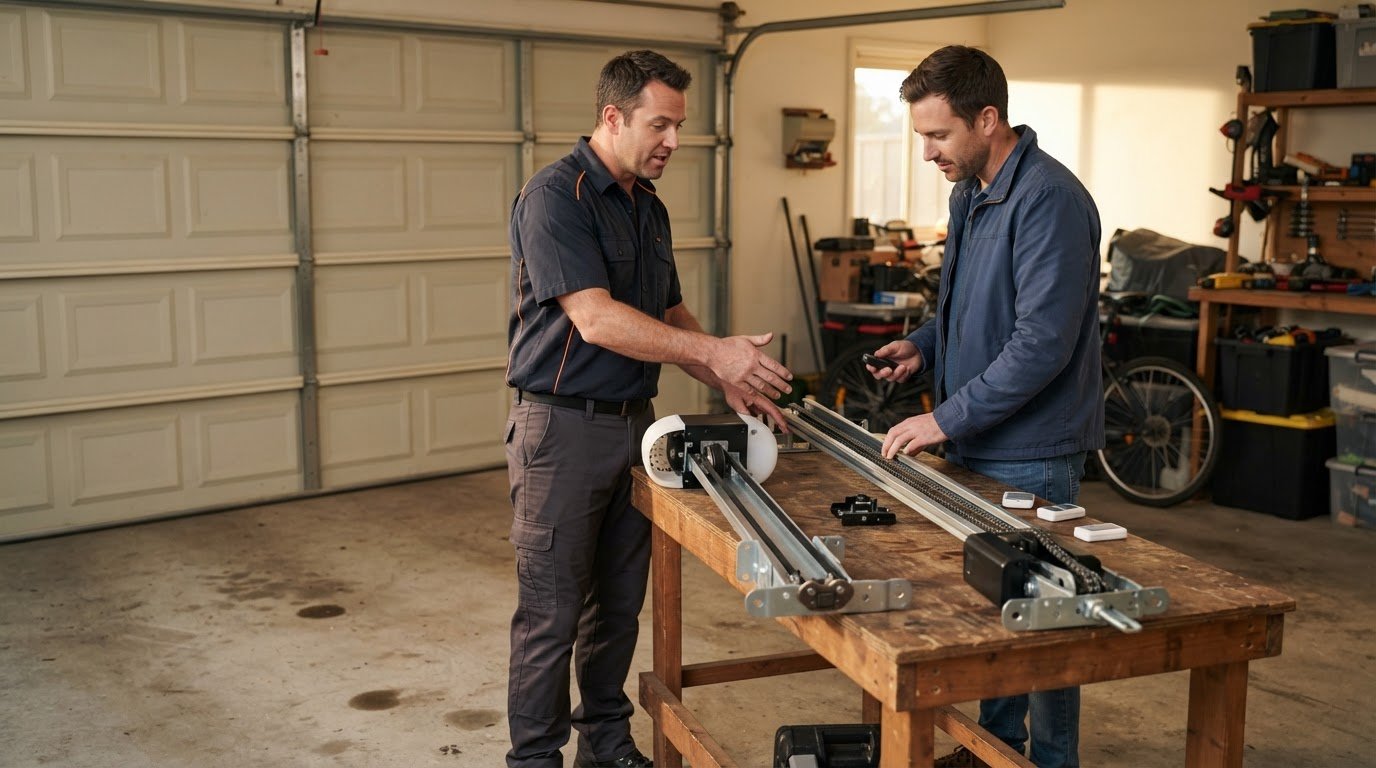
A belt or chain that’s too loose can rattle, but overtightening can damage the opener. Check the manufacturer’s instructions before making adjustments, and don’t alter tension if the correct setting isn’t clear. A belt-drive opener is generally quieter than a chain-drive model because the belt produces less operating noise. Opener prices depend on the model and installation requirements; a quote request establishes the cost and relevant factors.
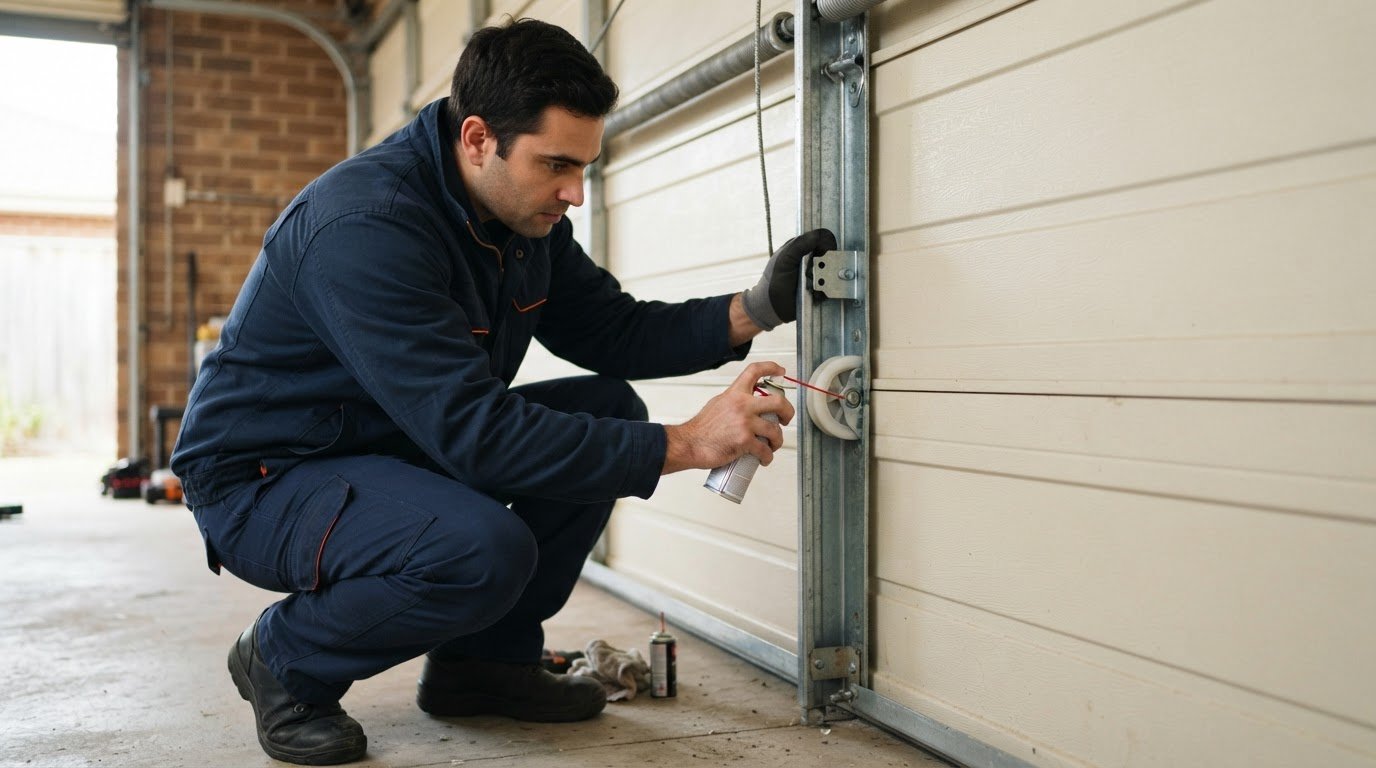
For compatible rollers, hinges and springs, use a suitable silicone-based garage door lubricant sparingly and follow its label. Lubricating compatible moving parts every six months can help reduce friction and squeaking. Don’t routinely lubricate tracks: wipe dirt from them with a damp cloth instead. Avoid applying lubricant to nylon or plastic rollers, as many products can damage these materials. Excess lubricant attracts dirt and can worsen operation.
Nylon rollers may run more quietly than steel rollers, but material alone doesn’t determine the noise. Bearing condition, wear and how smoothly each roller travels through the track also matter. Roller replacement costs depend on the roller type, compatibility and the work involved; the price is given after a quote request.
Listen for clicking at a roller, squeaking at a hinge or rattling along the opener rail. Apply lubricant only to compatible moving joints, such as suitable hinge pivots and roller bearings. Keep your hands clear of springs and cables, and don’t try to adjust a spring. It remains under tension even when the door is closed. A damaged spring needs professional attention, not extra lubricant.
If belt or chain noise continues, or tension and spring condition are uncertain, arrange a garage door repair assessment rather than forcing an adjustment. Correct tension and targeted lubrication can address specific noise sources, while indiscriminate tightening or coating parts can create new problems.
We Do Garage Doors: Garage door repairs
We Do Garage Doors can help when persistent noise points to a worn component, faulty motor or spring issue. Its garage door repair service addresses mechanical problems that cleaning and careful lubrication can’t resolve. The business serves Melbourne, including Greenvale, Craigieburn, Mickleham, Roxburgh Park and Wollert, and can assess noisy residential doors in these areas.
If the opener is noisy or no longer operating properly, motor repair or replacement may be the relevant next step. A damaged spring needs professional replacement, not DIY adjustment. We Do Garage Doors also installs smart controls as a retrofit to work with your existing door and motor.
Contact We Do Garage Doors to discuss a noisy garage door.
Take the next step towards quieter operation
Use the sound as a guide to your next decision. Noise that persists after basic care may point to a fault that needs more than another adjustment. Knowing when the sound occurs and how the door moves gives a repair professional useful context and helps focus attention on the likely source.
We Do Garage Doors offers garage door repairs, motor replacement and spring replacement for issues affecting smooth, quiet operation. A repair can address a fault in the door system, while motor or spring replacement may be appropriate when one of those components is the source. The right next step starts with identifying what needs attention, rather than changing parts at random.
If you’re still weighing how to make your garage door quieter, arrange help based on the noise and the door’s behaviour. Contact We Do Garage Doors to discuss the issue and a suitable repair. A quieter, smoother routine can start with one clear next step.
Frequently Asked Questions
What causes a noisy garage door?
Worn rollers, hinge friction, loose hardware, opener vibration and an unbalanced door can all create noise. To work out how to make your garage door quieter, note whether the sound is a click, squeak, rattle or rumble, and when it happens. For example, a repeated click during travel may point to a roller, while vibration at startup can suggest the opener mount.
How do you lubricate garage door hinges, rollers and tracks safely?
Use a suitable silicone-based garage door lubricant sparingly on compatible hinge joints and roller bearings. Check the roller material first, because lubricant can damage nylon or plastic rollers. Clean tracks with a damp cloth instead of coating them, and wipe away excess lubricant to limit dirt build-up. Keep clear of springs and cables, and follow the lubricant label.
How do you tighten garage door hardware to reduce rattling?
With the door stationary, look for accessible fasteners that are visibly loose. Tighten only hardware you can safely reach without dismantling or moving the door. Don’t adjust hinge brackets, spring fittings or cables, as these can affect the door’s support and movement. If rattling continues or the door shifts as it travels, arrange a professional inspection.
How can you make an automatic garage door opener quieter?
Before choosing a fix, identify whether the noise comes from the motor, its mounting or the drive mechanism. An isolator kit can reduce vibration transferred through the opener mount, while belt-drive openers are generally quieter than chain-drive models. Keep the belt or chain at the correct tension, since overtightening can damage the opener. Grinding, irregular movement or a loose mount needs a closer mechanical inspection.
How can you reduce garage door noise travelling into the house?
Address where vibration transfers into the building, such as at the opener’s mounting. Insulation may reduce some sound while the door operates, but it won’t repair a noisy mechanism. Note which room hears the sound and whether it starts with the motor or continues as the door moves. This pattern can help distinguish transmitted vibration from noise generated elsewhere.
How often should a garage door be maintained to keep it quiet?
Lubricate compatible moving parts every six months, using a small amount and avoiding nylon or plastic rollers. Between applications, listen for changes such as new clicks or squeaks during operation. Knowing how to make your garage door quieter also means noticing when routine care isn’t enough. Persistent noise or uneven movement calls for a professional inspection, not repeated adjustments.
Comments