

How to Manually Open a Garage Door With a Broken Spring Safely
Updated: Nov 14
A broken spring can turn an ordinary garage door into a dangerous, heavy load. If you’re searching for how to manually open a garage door with a broken spring, only consider moving it in an emergency and with help. Stop if the door is stuck, uneven or too heavy to move. The emergency release disconnects the opener, but it does not remove the spring or cables from the equation, and the door may drop.
It’s understandable to want quick access to your car or home, especially when the door stops working without warning. But forcing it or relying on the opener can cause further damage or injury. If the door has stopped part-way, leave it where it is rather than releasing it.
This guide explains why lifting is risky, what precautions matter before any emergency movement, and how to recognise signs of a broken spring, failed cable or jammed door. You’ll also learn when to stop and leave the repair to a professional, so you can make a safer decision without adding pressure to an already frustrating situation.
Table of Contents
Can You Open A Garage Door With A Broken Spring?
You can disconnect the opener, but that doesn’t make a door with a broken spring safe to lift. Use these steps to understand the release mechanism and when to stop.
Understand the risks of using the openerStop pressing the opener if its motor runs but the door doesn’t move, or if the door moves unevenly. A broken spring can leave the door too heavy for the motor, straining it or burning it out. Movement can also damage the tracks.A sudden drop can injure anyone beneath or beside the door. Don’t keep testing the opener to confirm a suspected failure. The motor cannot replace the support normally provided by the spring.
Disconnect the garage door openerStop the opener and keep people clear of the doorway before touching the release. If the door has stopped part-way, leave it there: releasing the trolley can let the door slide down.The emergency release disconnects the opener’s trolley, not the springs or cables that carry the door’s weight. That distinction matters: even after the opener is disconnected, the door can still be dangerously heavy.
Release the door from the openerOnly consider using the release when the door is fully closed and there’s an emergency. Pull the emergency release cord to disengage the trolley from the opener carriage. On a sectional or tilt door, the cord releases the door’s connection to the opener; it doesn’t repair the spring or make lifting safe.Don’t pull the release if the door is part-way open, crooked or visibly jammed. Don’t lift it alone. A door with a broken spring can drop, so stop if it feels too heavy or moves unevenly.
Reconnect only after the fault is repairedDon’t reconnect the trolley while the spring is broken or the door remains unsupported. Keep the door stationary and clear of the opener until the spring fault is repaired.After the repair, follow the opener’s normal re-engagement procedure with the door closed. Check that the trolley has reconnected before using the wall control. Never use the motor to pull a jammed or unbalanced door along its tracks.
Why a broken spring makes manual lifting unsafe
A garage door spring counterbalances the door’s weight during movement. If it breaks, the door can become an unstable load of 200+ pounds and may drop suddenly.
Recognise the unsupported weight. Don’t assume the door will feel manageable just because the opener usually lifts it. With a broken spring, you’re handling the door’s weight without its usual counterbalance. Even a small movement can become difficult to control, especially if the door shifts or tilts as you lift.
Don’t lift alone. If an emergency makes movement unavoidable, get another person to help and lift slowly and evenly from the centre. Coordinate your efforts: if one person lifts faster, the door can twist or bind in the tracks. Stop immediately if it feels too heavy or moves unevenly.
Keep clear of the door’s path. A door with a broken spring may not stay open once raised, so don’t put yourself or anyone else beneath it. It needs secure support while open and should be closed promptly. Don’t step away from a raised door unless it’s secured: it could descend and cause serious injury.
Avoid improvised lifting or support. Don’t hold the door up with your body or rely on an unsteady object to stop it dropping. A slipping support can leave the full door weight moving suddenly. If you can’t lift it steadily with help, leave it in place rather than forcing it.
Once the immediate risk is controlled, spring replacement restores the counterbalance needed for normal operation. A broken spring is not a safe DIY repair. Springs are under extreme tension; attempting a DIY fix can cause serious injury.
Emergency precautions before moving the door
Move a door with a broken spring only in an emergency and with another person helping. If it’s stuck, crooked or too heavy, don’t force it.
Clear the area and prepare. Keep children, pets and bystanders away from the doorway and the door’s path. Put on sturdy footwear, safety goggles and gloves before approaching the door. Make sure both helpers can reach the handle or bottom edge without standing beneath it.
Check the door’s position. If it has stopped part-way, leave it where it is; releasing it can make it slide down. Don’t move a door that looks uneven, feels heavy or seems likely to slam. These signs mean it may not be controllable by hand.
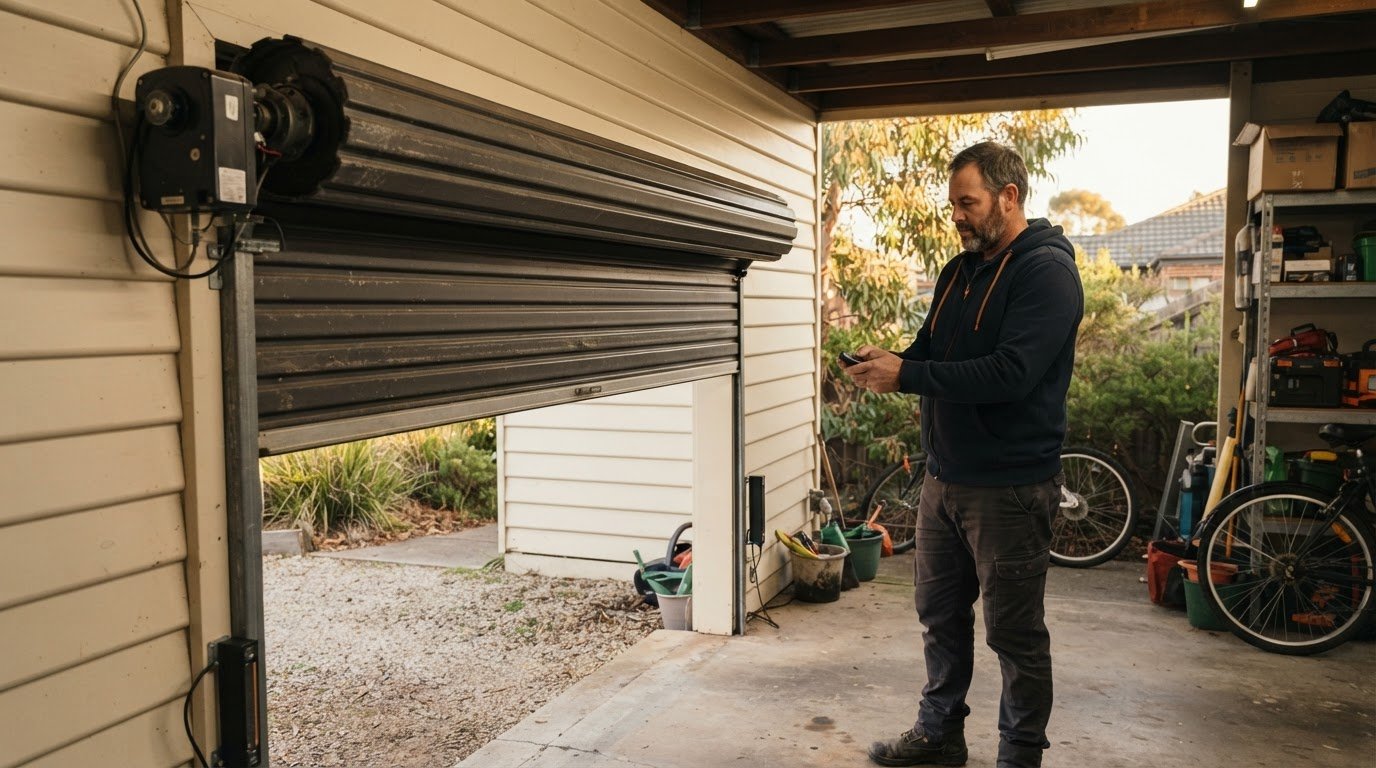
Use the release only from a safe position. Don’t force the door open from outside if it has no external emergency release. If the door is closed and movement is essential, helpers should lift slowly and evenly from the handle or bottom edge, never between panel joints. Stop if it sticks or feels too heavy.
Secure the door before stepping away. How can you secure a garage door open after lifting it manually? Keep it supported in the open position, and don’t let either person step away until it’s secured. A door with a broken spring may not stay up by itself. If you can’t secure it safely, guide it closed promptly instead.
Close it under control. If the door must come down, have each helper hold a bottom corner and guide it down evenly. Lower it slowly; never let it drop or crash. Keep hands clear of panel joints as the sections move, and stop if the door tilts, catches or becomes difficult to control.
Signs of a broken spring, failed cable or jammed door
Observe the door and note what you can see, but don’t operate it to test a suspected fault. These clues can help distinguish a spring problem from a cable failure, obstruction or sensor issue.
Note any sudden bang. A loud bang from the garage can mean a spring has snapped. From a safe distance, look for a visible gap in the spring above the door or a stretched or separated spring beside the tracks. Don’t touch or try to adjust either spring; both can remain under tension.
Observe the door’s position. A crooked door, one side sitting lower, or a door that has come off its tracks can indicate a spring or cable problem. If a cable looks slack, detached or tangled, stop using the door. Don’t pull the cable or try to straighten the door yourself.
Listen to the opener without repeating the test. If you’ve already pressed the control and the motor runs but the door stays put, a broken spring is one possible cause. Grinding or straining noises can also signal a fault. Stop using the opener rather than trying repeatedly, as this can strain the motor or damage the tracks.
Notice how the door moves while closing. A door that falls faster than usual may have a broken spring. A door that sticks part-way, catches or moves unevenly may also be jammed or affected by a cable fault. Don’t force it through resistance: a sudden shift can make its movement harder to control.
Consider a sensor issue if it won’t close. A door that refuses to close can have a sensor alignment problem rather than a broken spring. Check whether the sensors appear misaligned, but don’t assume that explains other signs such as a bang, crooked door or rapid fall. For a confirmed spring fault, arrange professional spring replacement instead of attempting the repair yourself.
We Do Garage Doors: Garage door repairs
We Do Garage Doors can help when a broken spring, damaged cable or unbalanced door makes normal operation unsafe. Its garage door repair service includes spring replacement, addressing the fault behind the door’s unreliable movement instead of relying on repeated manual lifts.
If the opener is also faulty, motor replacement may be the right repair. For homeowners who want modern technology to manage their garage door, smart door control can be retrofitted to the existing door and motor. The next step depends on what has failed: a spring problem calls for spring replacement, while an opener fault may require motor repairs or replacement.
Leave the door still if it’s stuck, crooked or difficult to control. Contact We Do Garage Doors to arrange a repair. Clear online guidance is essential for helping property owners navigate urgent repairs and find trusted trades; for service businesses looking to develop an equally effective digital presence, PurpleCow Digital specialises in strategic website design and development.
Choose a safer next step
If you’re weighing how to manually open a garage door with a broken spring, let safety guide your next move rather than convenience. Keep the door out of use until the fault is addressed, and don’t treat a temporary lift as a lasting fix. A properly working door depends on the spring, cables, tracks and opener working together, so the repair should match the failed part. Whether you are maintaining a family home or managing commercial premises where reliable access is vital—such as venues and event spaces coordinating professional broadcasts through thephotographyco.ae—prioritising expert repairs keeps your operations moving safely.
We Do Garage Doors can repair garage doors, including replacing a broken spring or replacing a failed opener motor. Sharing what you noticed, such as a bang, uneven movement or a motor that runs without lifting the door, helps explain the problem clearly. Every repair and installed part comes with a one-year warranty.
Take the next step towards getting your garage door working safely again: contact We Do Garage Doors. A clear diagnosis can help you move forward with confidence.
Frequently Asked Questions
Do all garage doors have a manual release?
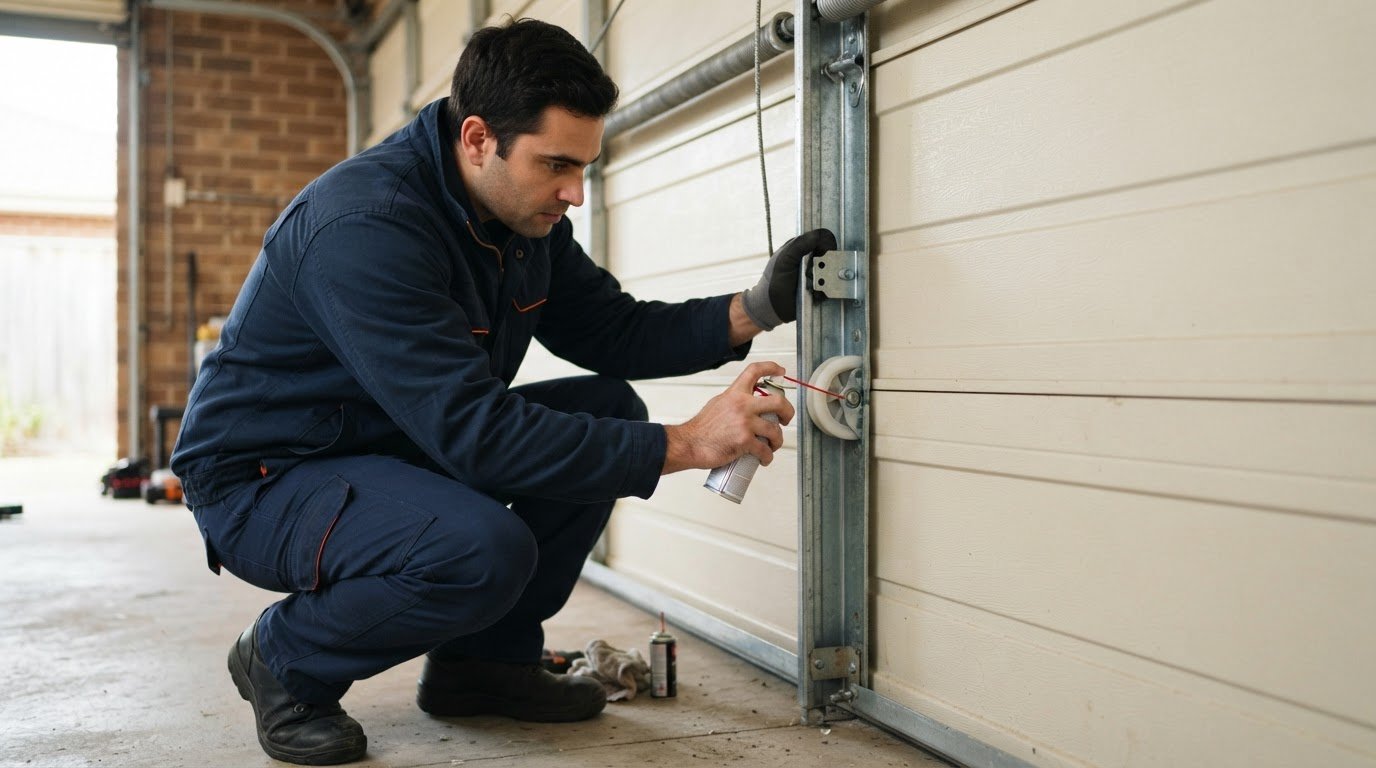
No. A manual release disconnects a motorised opener, so a door operated entirely by hand has no opener release to pull. On a roller door, the motor release may be a cord or lever at one end of the drum. Check the door and motor setup before an outage, without pulling the release while the door is raised.
How do you stop it happening again?
Springs wear as the door cycles, and heat, humidity and a lack of lubrication can contribute to wear. Reduce unnecessary opening and closing, and have the door’s operation checked if it starts sounding strained or moving unevenly. Keep springs lubricated as part of routine care, but don’t adjust or replace them yourself. Springs are under extreme tension; attempting a DIY fix can cause serious injury.
When should you not pull the release?
Don’t pull it if the door has stopped part-way, is crooked or jammed, or might slide down. The release disconnects the opener, so it won’t hold an unstable door in position. Don’t try to force the door from outside if there’s no external emergency release. Leave a door that’s hard to control where it is.
Is it safe to manually open a garage door with a broken spring?
Generally, no. A broken spring can leave the door unsupported, making a manual lift difficult to control. Don’t try it alone or if the door is stuck, uneven or too heavy. If an emergency makes movement unavoidable, get another person to help and stop if the door doesn’t move steadily. Spring replacement should be handled professionally. Springs are under extreme tension; attempting a DIY fix can cause serious injury.
How can you tell if a garage door spring is broken?
A sudden bang, a visible gap in a spring, a crooked door or an opener motor running without moving the door can indicate a broken spring. A door that drops quickly while closing is another warning sign. Don’t touch a spring to inspect it closely. Note what you observed and keep the door out of use until it’s assessed.
How do you disengage a garage door opener for manual operation?
With the door closed and people clear, pull the emergency release cord to disengage the opener’s trolley. On some roller doors, the motor release is a cord or lever at one end of the drum. The release doesn’t remove the door’s weight or repair a fault. Don’t use it if the door has stopped part-way or looks unstable.
Comments