

How to Fix an ATA Garage Door Motor by Checking Power and Symptoms
If an ATA motor makes noise while the door stays still, it may need repair, but that symptom alone does not reveal the cause. To fix an ATA garage door motor, a professional can assess the power supply and operation, then determine whether repair or replacement is appropriate.
If your door will not move, stops partway or reverses unexpectedly, it is natural to wonder whether the motor has failed. A careful diagnosis can distinguish a power issue from a motor or door fault, so the next step addresses what is actually happening rather than relying on guesswork.
This guide covers symptoms to note, how a professional assesses power and operation, and when repair or replacement may be suitable. Details about the motor and the door’s behaviour can help make the assessment more straightforward.
Table of Contents
When to stop DIY repairs and call a technician
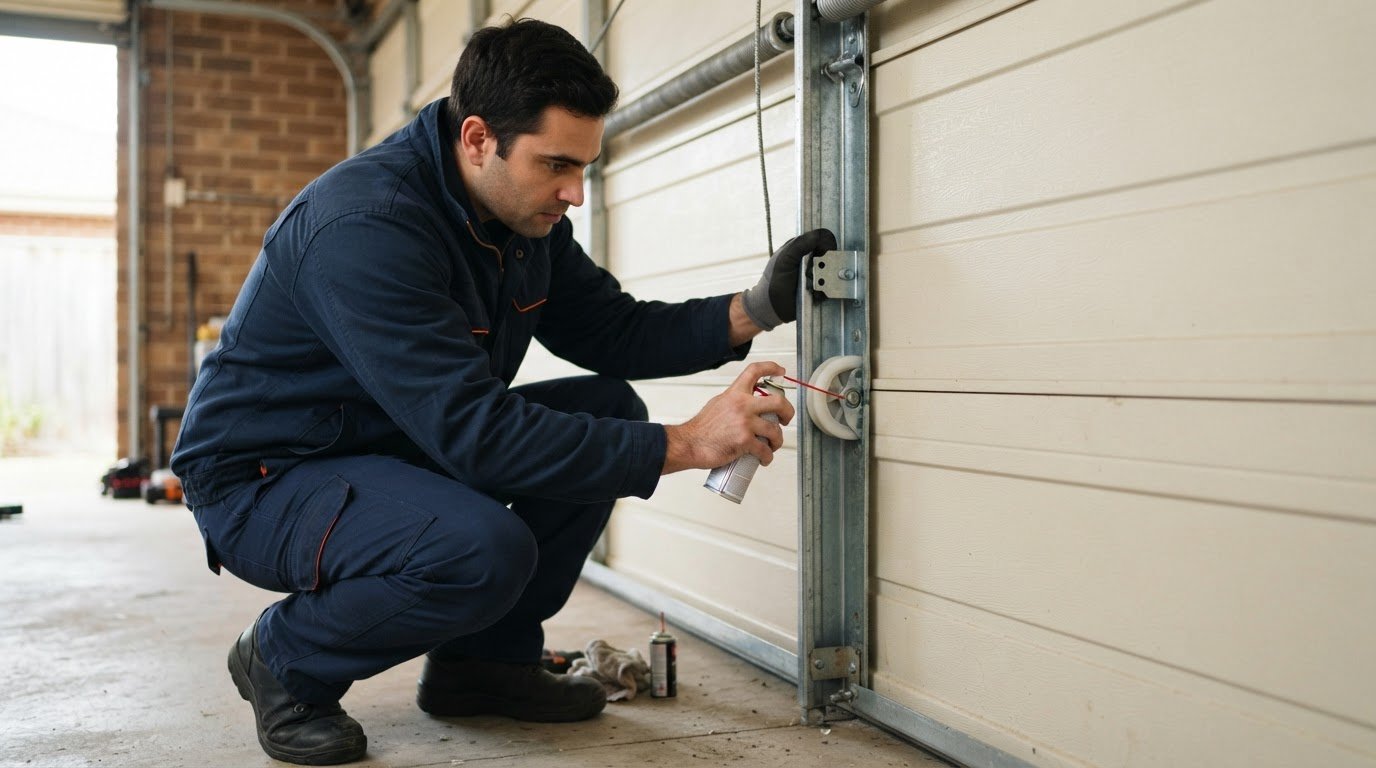
Stop troubleshooting if the door has jumped more than 25 mm off its track. A skewed roller door can indicate a door or track fault, not simply a motor problem. Don’t keep operating it to test the opener; have a technician assess the door and identify what needs repair.
Arrange a professional assessment if the motor makes noise but the door does not move. This can indicate a repair is needed; if the motor no longer operates, it may have failed and need replacement. Note what you hear and when it happens so you can describe the fault clearly.
Do not replace a motor capacitor yourself. It can store a charge even when unplugged, so leave its inspection and replacement to a technician. If you are unsure whether the fault is in the opener, door or springs, avoid continuing DIY repairs and arrange a professional assessment.
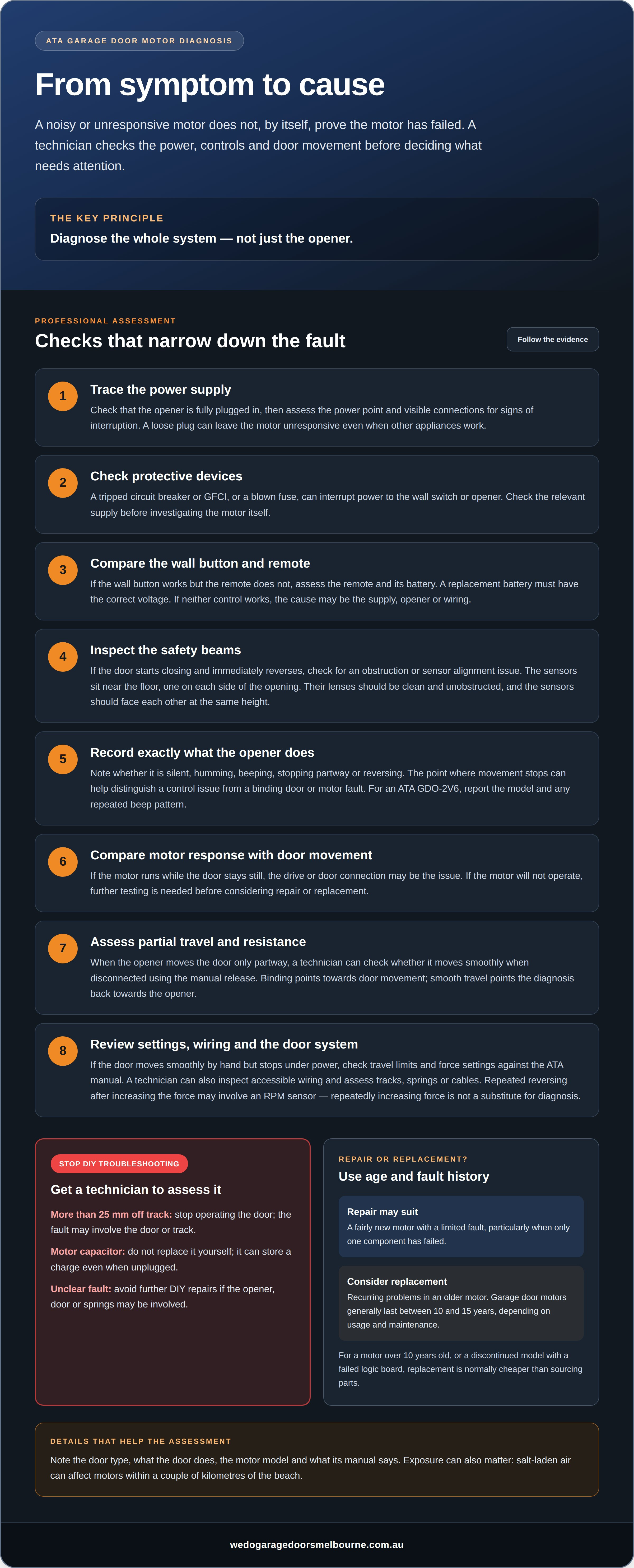
Use the motor’s age and fault history to guide the repair-versus-replacement decision. Garage door motors generally last between 10 and 15 years, depending on usage and maintenance. A fairly new motor with a minor fault may be repairable, particularly when only one component has failed.
Consider replacement if an older motor has recurring problems. For a motor over 10 years old, or a discontinued model with a failed logic board, replacement is normally cheaper than sourcing parts. A technician can assess the model, parts situation and symptoms before recommending whether to repair or replace.
For garage door repairs in Melbourne, Greenvale, Craigieburn, Mickleham, Roxburgh Park and Wollert, note the door type, how it behaves and what the manual says about its model. Salt-laden air can affect motors within a couple of kilometres of the beach. Exposure, the motor’s age and recurring faults all help a technician assess the next step.
How a technician checks the circuit breaker, fuse and GFCI
During a power outage, a technician can release an ATA door using its manual release while the door is fully closed. After power returns, the opener may re-engage once the motor completes one full cycle.
Trace the power supply. The technician checks that the opener is fully plugged in, then assesses the power point and visible connections for signs of interruption. A loose plug can leave the motor unresponsive even if the garage lights and other appliances work.
Check the circuit breaker, fuse and GFCI. A tripped breaker or GFCI, or a blown fuse, can interrupt power to the wall switch or opener. The technician checks the relevant supply and determines whether a protective device has cut power before investigating the motor itself.
Compare the wall button and remote. If the wall button works but the remote does not, the technician can assess the remote and its battery. A replacement battery must have the correct voltage. If neither control operates the door, the fault may involve the power supply, opener or wiring, not just the remote.
Inspect the safety beams. If the door starts closing and immediately reverses, its safety sensors may be responding to an obstruction or alignment issue. The sensors sit near the floor, one on each side of the opening, and should face each other at the same height. The technician checks that their lenses are clean, unobstructed and aligned.
Assess the wiring and door system. The technician isolates power before working on electrical connections and inspects accessible wiring for damage or loose connections. They can also assess whether tracks, springs or cables affect operation, rather than assuming every symptom is caused by the motor.
Confirm the cause before repairs. The technician compares the response from the wall button, remote and sensors with the opener’s behaviour. If power checks don’t explain the fault, professional garage door repairs can address the underlying issue rather than treating a symptom alone.
How a technician diagnoses common garage door motor symptoms
Record the exact behaviour. A technician notes whether the opener is silent, humming, beeping, stopping partway or reversing. The point where movement stops helps distinguish a control issue from a door that’s binding or a motor fault. For an ATA GDO-2V6, report the model and any repeated beep pattern.
Compare the motor’s response with the door’s movement. The technician checks whether the motor runs while the door stays still, or whether both stop. If the motor runs without moving the door, there may be a problem with the drive or door connection. If the motor will not operate, further testing is needed before considering repair or replacement.
Assess partial travel without forcing the door. If the opener moves the door only partway, the technician checks whether it moves smoothly when disconnected using the manual release. Binding during manual movement directs attention to the door’s movement; smooth travel points the diagnosis back to the opener.
Review travel limits and force settings. If the door moves smoothly by hand but stops under power, a technician uses the ATA manual to check the opener’s travel limits and force settings. These controls affect how far the door travels and how the opener responds to resistance. Any adjustment should follow the instructions for that model.
Investigate repeated reversing. If the door keeps reversing after the force threshold has been increased, an RPM sensor may be a possible cause. A technician assesses the opener and related components instead of repeatedly increasing the force. Reversing can signal that the door or opener needs diagnosis, not more force.
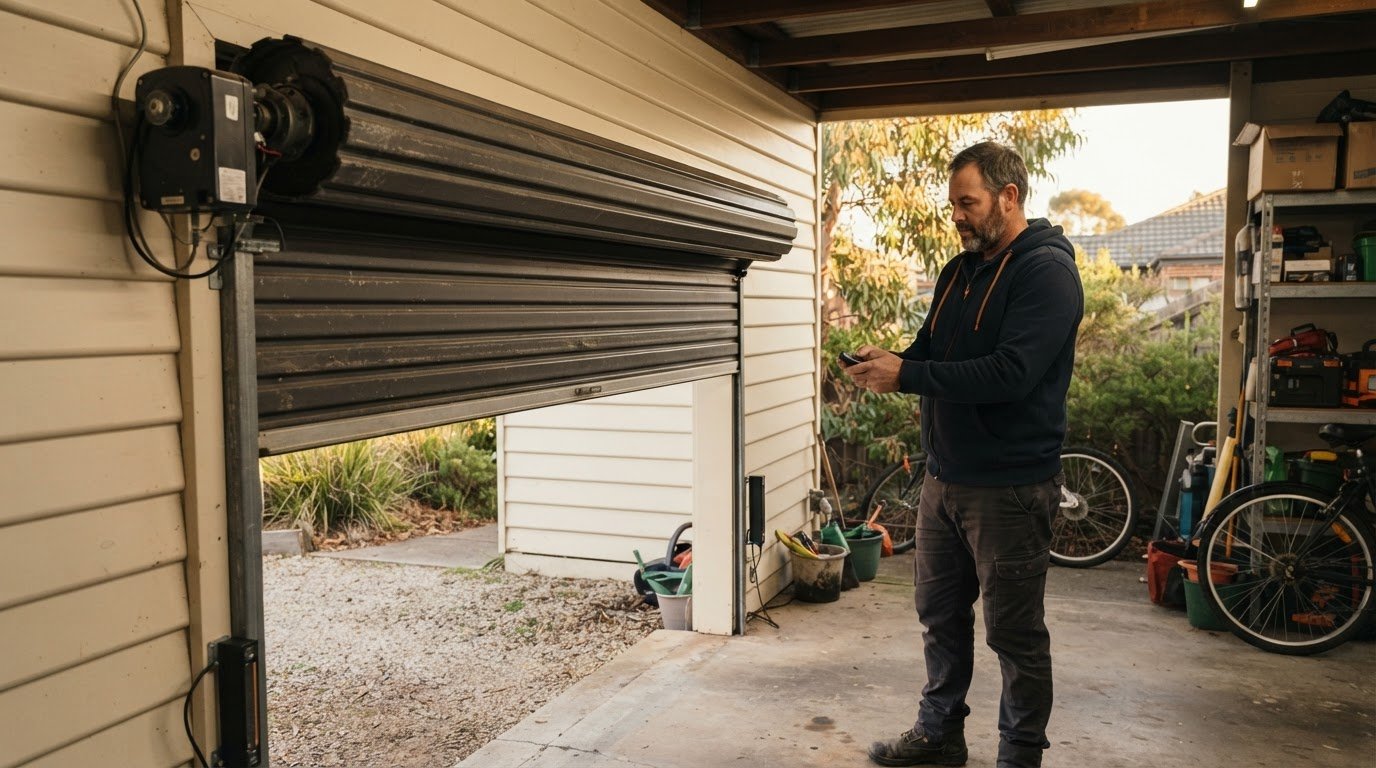
Match the symptom to a repair decision. A reported ATA GDO-2V6 case involved a roller door opening only two inches before stopping, followed by 20 beeps. Those details help focus diagnosis, but don’t prove a single fault. To fix an ATA garage door motor, the technician weighs the model, movement and test results before recommending repairs or replacement.
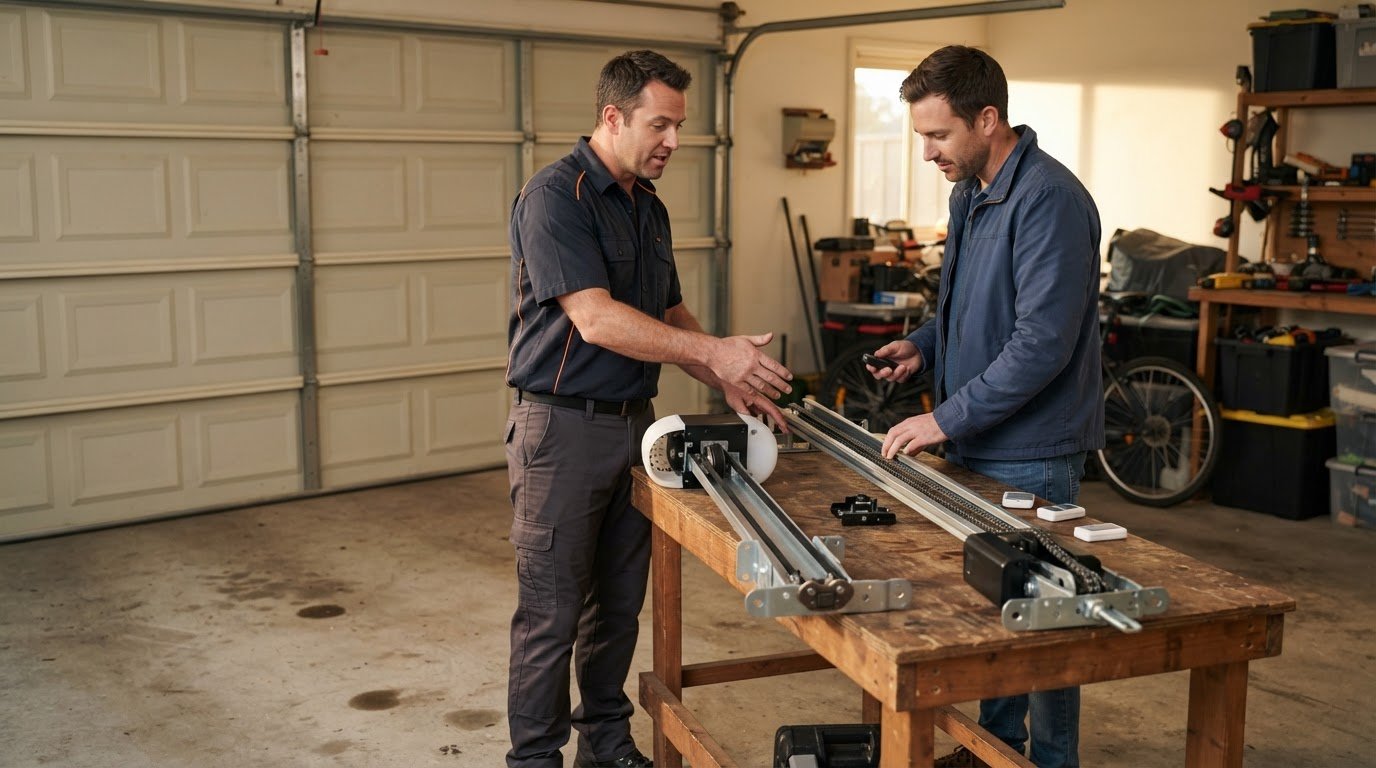
How does a technician safely check ATA motor power, batteries, safety sensors and wiring?
Assess the remote battery. If the wall button operates the door but the remote does not, the technician checks the remote battery and its condition. A replacement battery must have the correct voltage. This helps distinguish a remote-control issue from a fault with the opener’s power supply.
Locate both safety sensors. The technician checks the two sensors near the floor, one on each side of the opening. Photo-eye sensors are positioned about 150 to 200 mm above the floor. Their position helps the technician assess whether the door’s safety system could be affecting operation.
Check sensor alignment and lenses. The sensors should face each other at the same height. The technician checks that each infrared lens is clean and unobstructed, then assesses alignment. Dust, an object in the beam or sensors aimed away from each other can interrupt the safety signal.
Inspect wiring with power isolated. The technician isolates power to the opener before examining electrical connections. They inspect accessible wiring for visible wear, damage or loose connections, without asking the homeowner to handle electrical components. This can reveal connection faults that a remote battery check cannot explain.
Reassess operation after checks. The technician considers the plug, remote, sensors and wiring together, then assesses the opener’s response. If power and controls appear sound but the motor still fails, the fault may need further diagnosis and a repair or replacement decision. Arrange a professional motor assessment to identify the next step.
We Do Garage Doors: Motor replacement
We Do Garage Doors repairs ATA motor and opener faults and can help determine whether repair or replacement is appropriate. If the motor has stopped working or an older system keeps developing faults, motor replacement may be suitable. If the cause lies elsewhere, a garage door repair may address the underlying problem.
The symptoms, motor condition and door operation all help guide the decision. A technician can also identify whether a spring fault is affecting movement or whether a smart control retrofit suits your setup. The aim is to match the work to the cause, rather than replace a motor without understanding the fault.
For professional advice on an ATA motor that isn’t operating properly, contact We Do Garage Doors.
Choose the right next step for your garage door
A faulty opener can disrupt more than your trips in and out of the garage. Before deciding how to fix an ATA garage door motor, consider what you need from the door each day and share those priorities during a professional assessment. Clear details about the fault help guide the discussion towards a practical solution that addresses the underlying problem.
We Do Garage Doors can assess the issue and advise whether garage door repair, motor replacement or spring replacement is relevant. The right option depends on where the fault lies and how it affects the door. Understanding the likely cause gives you a clearer basis for deciding what to do next.
If you’re ready to discuss the problem, contact We Do Garage Doors. A considered next step can help get your garage door back to working as it should.
Frequently Asked Questions
Diagnosed it, now what?
Use the diagnosis to decide whether the next step is a targeted repair or motor replacement. Ask what component appears to be faulty, how it affects the door and whether the door itself also needs attention. To fix an ATA garage door motor effectively, the work should address the diagnosed cause, not just the symptom. In Melbourne, We Do Garage Doors provides repairs, motor replacement and spring replacement, each with a 1-year warranty on repairs and installed parts.
How can a technician tell if the fault is in the remote or the motor unit itself?
A technician compares how the door responds to its remote and wall control, then checks the remote and its battery. If the wall control operates the door but the remote does not, the problem may be with the remote or its signal. If neither control works, the technician investigates the opener, power supply and connections. This comparison helps distinguish a control fault from a motor-unit problem.
How can a technician tell if a storm or power surge has damaged the motor?
A technician considers when the fault began and whether the opener stopped working after a storm or power event. They inspect accessible connections and assess the motor, controls and door during testing. A sudden failure is useful context, but it does not prove surge damage. Diagnosis depends on the fault observed and whether testing points to the motor or another part of the system.
How does a technician troubleshoot an ATA garage door motor that won’t open or close?
A technician first identifies whether the door fails to open, fails to close or stops during travel, then compares that behaviour with the controls. They assess the opener and door as a connected system, including whether movement is obstructed or inconsistent. If the door operates in one direction but not the other, that specific response needs diagnosis rather than an assumption that the motor has failed.
How can a technician interpret ATA garage door motor flashing lights and error codes?
A technician records the light pattern or displayed code and checks it against the manual for that ATA model. The indicator should not be interpreted without identifying the opener, so the model name and a clear description of the pattern are useful. The technician compares the indicator with the door’s behaviour and other test results before deciding whether the issue involves a setting, sensor or motor component.
When should I repair or replace an ATA garage door motor, and what is the cost in Australia?
Repair may suit a newer motor with an isolated fault; replacement may be considered if an older system has recurring problems or parts are difficult to source. In Australia, the cost depends on the fault, motor condition, required parts and work involved. We Do Garage Doors provides a price after a quote request. Its 1-year warranty applies to repairs, installed parts and new installations.
Comments